Chapter 2
IN THIS LESSON
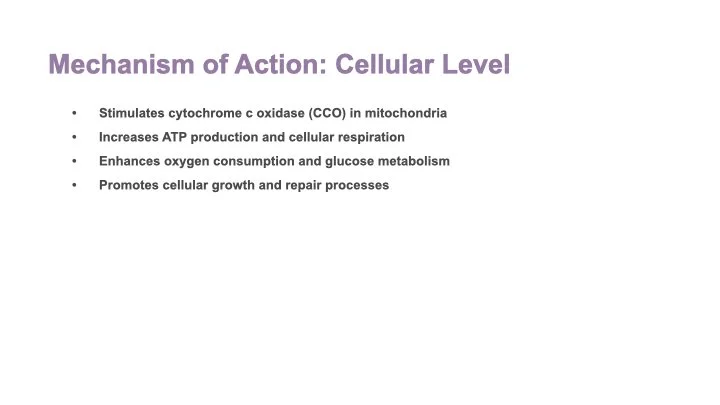
At the cellular level, photobiomodulation therapy works through a sophisticated cascade of biochemical processes that enhance the body's natural healing capabilities. When specific wavelengths of light penetrate tissue, they directly stimulate cytochrome c oxidase (CCO), a crucial enzyme within the mitochondria—the powerhouse of every cell. This photonic activation triggers a chain reaction: ATP production increases, providing cells with more energy for essential functions; oxygen consumption and glucose metabolism are enhanced, fueling cellular processes more efficiently; and cellular respiration improves overall. Together, these mechanisms activate the body's intrinsic repair systems, promoting faster cellular growth and tissue regeneration. This scientific foundation explains why photobiomodulation therapy delivers consistent therapeutic results across such a wide range of clinical applications—from pain management and inflammation reduction to accelerated wound healing and tissue repair.
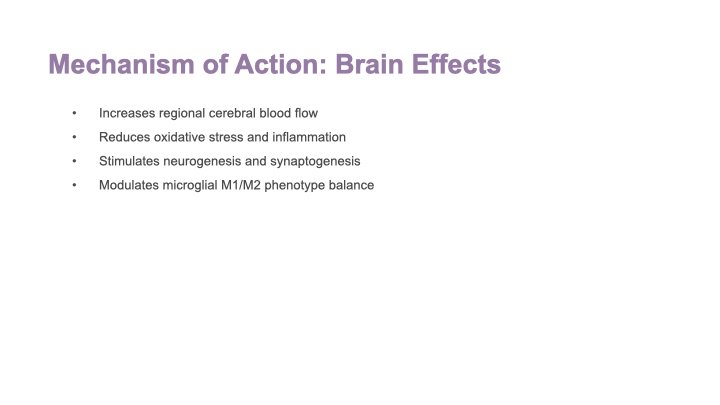
Photobiomodulation therapy demonstrates powerful neuroprotective and neuroregenerative effects through multiple biological mechanisms. At the cellular level, targeted light therapy increases regional cerebral blood flow, delivering enhanced oxygen and nutrients to brain tissue. Simultaneously, it combats oxidative stress and reduces inflammation—two critical factors in neurodegenerative conditions and cognitive decline. The therapy also stimulates neurogenesis (the formation of new neurons) and synaptogenesis (the creation of new neural connections), supporting brain plasticity and function. Additionally, photobiomodulation modulates the balance between M1 and M2 microglial phenotypes, shifting the brain's immune cells from a pro-inflammatory state to a healing, anti-inflammatory state. These combined mechanisms make photobiomodulation a promising therapeutic approach for conditions ranging from traumatic brain injury and stroke recovery to neurodegenerative diseases and cognitive enhancement.